Dubai Chocolate Bars with Pistachio Filling: Step-by-Step Instructions
Instructions
- Pull the kadayif apart into loose strands on a board, then chop it into lengths of 1 to 2 cm. Doing this before any heat goes near it matters: clumped nests toast on the outside and stay raw and chewy in the middle.
- Melt the butter in a wide frying pan over medium-low heat and add the kadayif. Use the widest pan you own so the strands sit in a thin layer; piled up, they steam in their own moisture instead of toasting.
- Toast for 8 to 12 minutes, stirring almost constantly and scraping the pan base. The pastry stays pale for most of that time, then turns from straw to deep gold in the last two minutes, so do not walk away at the end.
- Take the pan off the heat when the kadayif is one shade lighter than the colour you want, and tip it straight onto a cold tray spread in a thin layer. Residual heat in the butter keeps browning it for another minute, and this is where most batches burn. Leave it to cool completely; warm kadayif will soften the moment it meets the filling.
- Stir the pistachio cream, tahini and salt together in a bowl until smooth, adding the rose water and icing sugar if you are using them. The tahini is not decoration: it cuts the sweetness of the pistachio cream and keeps the filling from setting hard in the fridge.
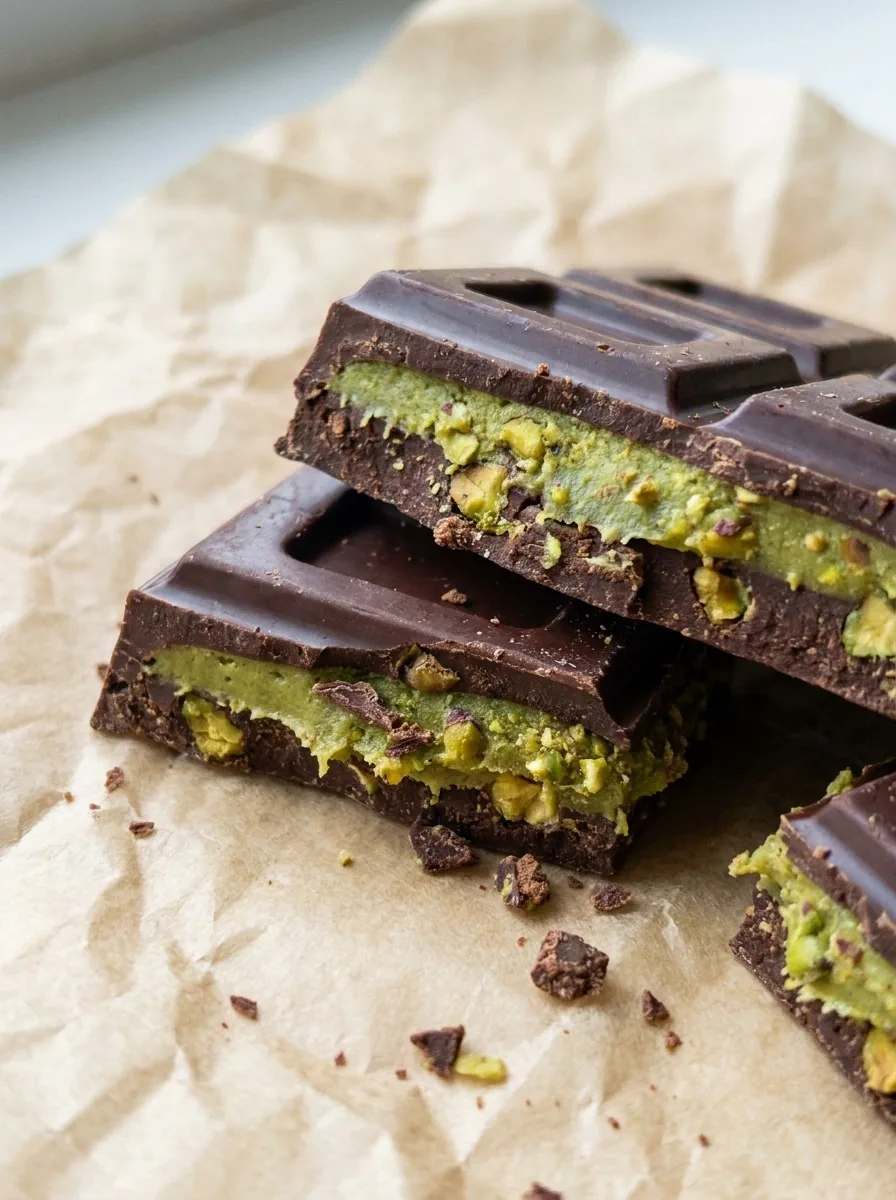
- Fold in the cooled kadayif and the chopped pistachios. You want a mixture that holds together when pressed but still looks loose and shaggy. If it is stiff enough to crack, work in the drop of nut oil.
- Temper the chocolate by seeding. Melt 270 g of it in a bowl over barely simmering water, stirring until it reaches 45 to 50 °C, then lift the bowl off and dry its base. Add the remaining 130 g in small handfuls, stirring continuously until every piece has melted and the chocolate reads 31 to 32 °C. Tempered chocolate is what gives the bar its gloss and its clean snap; untempered chocolate sets soft, streaky and grey.
- Test it before you commit: smear a little on the tip of a cold knife and leave it at room temperature for three minutes. It should set firm, shiny and without streaks. If it stays tacky, stir in a few more pieces and let the temperature drop another degree.
- Spoon tempered chocolate into six bar mould cavities, tilt each one to coat the walls fully, then turn the mould upside down over the bowl to drain the excess. Scrape the top flat with a palette knife and leave to set for 10 to 15 minutes in a cool room, around 18 °C. Chill it in the fridge at this stage and the shell will bloom.
- Press the filling into the set shells, leaving 3 mm clear at the top, then flood that gap with the rest of the tempered chocolate and scrape level. Rest the bars at room temperature for 20 minutes, then refrigerate for 30 to 40 minutes. The chocolate contracts as it sets, and the bars will drop out of the mould with a tap when they are ready.
Recipe Variations
Marbled shells. Melt the white chocolate, temper it the same way to 28 to 29 °C, and flick a few lines into each cavity before pouring the dark chocolate. Tint it with a pinch of pistachio powder for a green swirl.
Hazelnut version. Replace the pistachio cream with a smooth hazelnut praline paste and the chopped pistachios with toasted hazelnuts. The tahini still earns its place.
Salted. Scatter a few flakes of sea salt onto the sealing layer before it sets. Against the sweetness of the filling it is the single cheapest improvement you can make.
Cardamom and rose. Add a quarter teaspoon of ground cardamom to the filling alongside the rose water for a flavour closer to classic Levantine pastry.
Spoonable version. Skip the moulds entirely: layer tempered chocolate, filling and chocolate in small glass jars and chill. Easier, and it keeps for the same length of time.
Serving Ideas
Serve the bars whole and let people break them, because the sound and the cross-section are half the point. Take them out of the fridge 15 minutes beforehand; straight from cold the filling is firm and the pistachio flavour is muted.
They go well with something bitter and hot. Unsweetened Turkish coffee or a strong black tea cuts through the richness far better than anything sweet does, and a small glass of mint tea is the traditional pairing in the region the filling comes from.
For a dessert plate, cut one bar into three on the diagonal with a warm knife and serve with a spoonful of thick yoghurt and a few pomegranate seeds. The acidity resets the palate between bites, and a single bar then stretches to three portions.
Keeping It Fresh
Store the bars in an airtight container at cool room temperature, around 16 to 18 °C, for up to two weeks. The enemy here is humidity, not warmth: moisture in the air softens the kadayif and dulls the chocolate, so a sealed tin matters more than a cold shelf.
The fridge works if your kitchen is warm, but wrap each bar first and let it come back to room temperature inside its wrapping before opening. Unwrapped, condensation forms on the cold chocolate and leaves a white sugar bloom on the surface.
They freeze for up to three months, though the filling loses a little of its crunch on thawing. Thaw them in the fridge overnight, still wrapped, then bring them up to room temperature slowly. Never refreeze a bar that has already been thawed, as the second cycle turns the kadayif soft all the way through.
Reader Questions Answered
What exactly is kadayif?
It is filo dough spun into fine strands, sold fresh or frozen in Middle Eastern and Turkish shops and often labelled kataifi or shredded pastry. There is no real substitute; crushed vermicelli and shredded wheat both go soggy within a day.
Can I skip tempering and just melt the chocolate?
You can, but the bars must then be kept in the fridge, they will be soft to the touch and the surface will be dull. If you want the snap and the shine, the seeding method above is the shortest route to it.
My filling came out oily. What went wrong?
Almost always too much butter left in the kadayif. Drain the toasted strands on kitchen paper before cooling them, and measure the tahini rather than pouring by eye, as the oil that settles on top of the jar counts towards it.
Can I use milk chocolate instead?
Yes, though the bar becomes very sweet against an already sweet filling. If you do, seed to 29 to 30 °C rather than 31 to 32 °C, and cut the icing sugar from the filling entirely.
Do I need a polycarbonate mould?
No. Silicone bar moulds work and release easily, but they give a slightly matte finish. A loaf tin lined with baking paper also works if you treat it as one large slab and cut bars from it with a warm knife.
Wrapping Up
Two things decide whether this bar is good: the colour of the kadayif when it leaves the pan, and the temperature of the chocolate when it goes into the mould. Everything else is assembly.
Get those right and you have six bars that shine, snap and crunch, for a fraction of what they cost in a shop. Get one of them wrong and you still have a very pleasant pistachio dessert, so there is little to lose in trying.
Related recipes: Creamy Orange Gelatin Squares You Can Eat With Your Hands, Homemade Strawberry Gelatin Cups with Fresh Fruit, Baked Oats with Banana and Blueberries, Cheeseburger Casserole with Pickles and Cheddar, Marry Me Chicken in a Creamy Sun-Dried Tomato Sauce.
Learn more: Chocolate on Wikipedia · food storage & safety (FoodSafety.gov).
◆ ◆ ◆
← Back to Dubai Chocolate Bars with Pistachio FillingGet new recipes
One tasty homemade recipe in your inbox each week. No spam, unsubscribe anytime.
Comments (9)