Dubai Chocolate Bars with Pistachio Filling
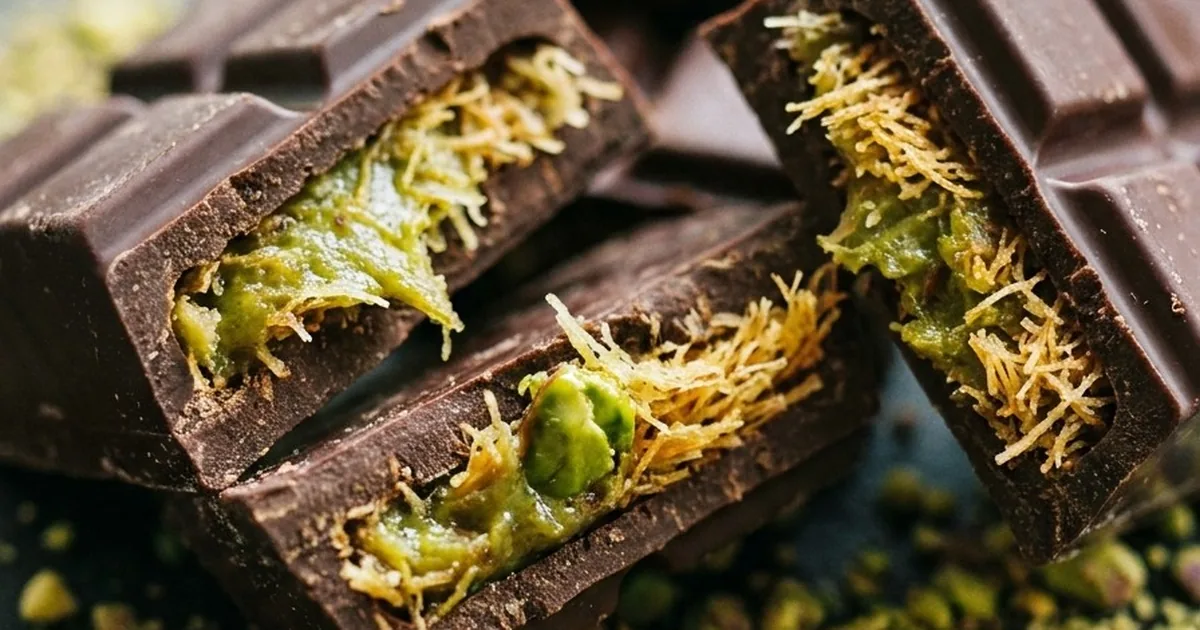
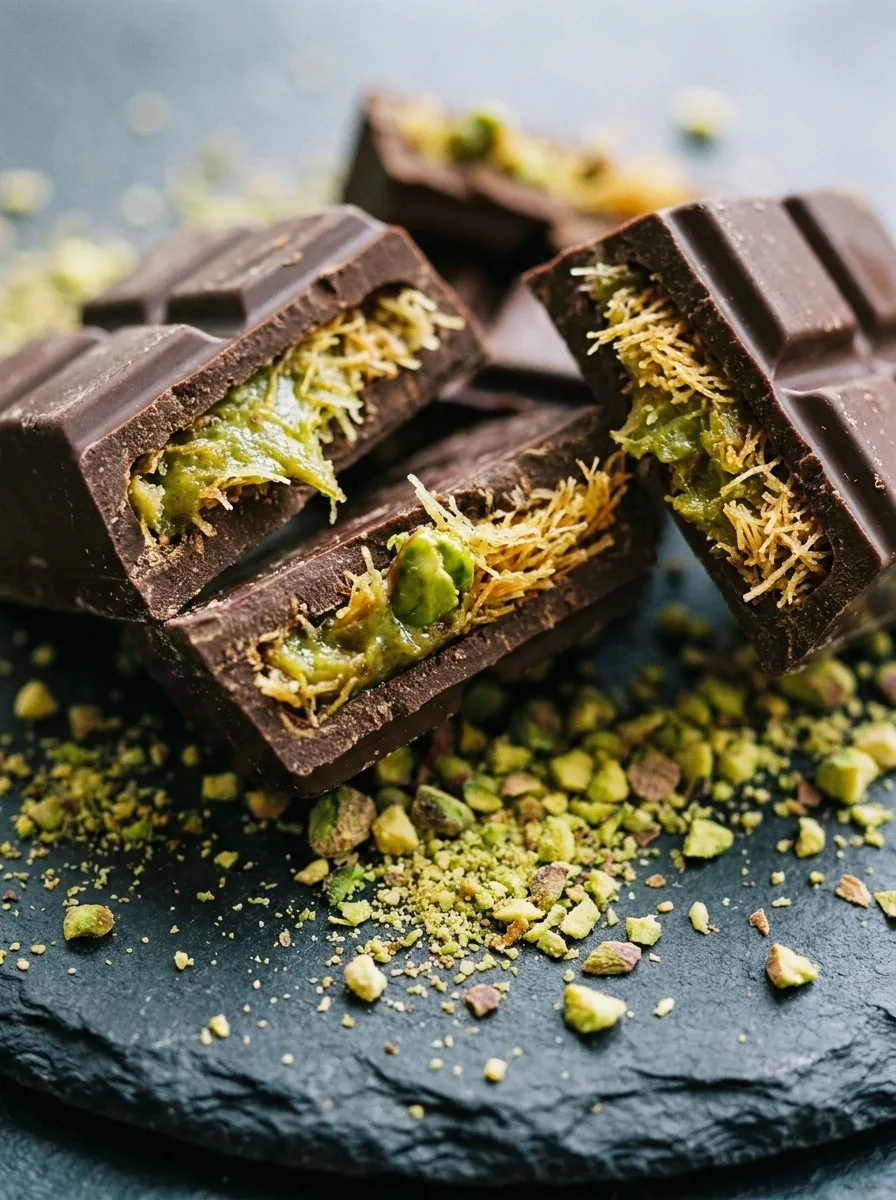
Dubai chocolate bars made at home: kadayif toasted in butter, folded through pistachio cream and tahini, and sealed inside tempered dark chocolate shells.
A Dubai chocolate bar is a thick shell of dark chocolate filled with buttery toasted kadayif bound in pistachio cream. The whole dish rests on two techniques, and neither is difficult once you know what you are looking for. The kadayif has to be toasted slowly in butter until it is deep gold and audibly crisp, because that crunch is the only texture in the bar. The chocolate has to be tempered, or the shell will be soft, pale and dull instead of glossy and sharp at the break. This version makes six bars, uses a seeding method that needs no special equipment, and takes about three hours from start to first bite.
| Prep Time | 40 | Cook Time | 15 |
| Servings | 6 | Calories | 525 kcal |
Ingredients
- 400 g (14 oz) dark chocolate, 54 to 70% cocoa solids, in callets or finely chopped
- 150 g (5.3 oz) kadayif pastry (shredded filo), fresh or fully thawed
- 45 g (3 tablespoons) unsalted butter
- 200 g (7 oz) pistachio cream, smooth and sweetened
- 45 g (3 tablespoons) light tahini, well stirred
- 30 g (1 oz) shelled unsalted pistachios, roughly chopped
- 15 g (2 tablespoons) icing sugar, optional, only if your pistachio cream is lean
- 1/4 teaspoon fine sea salt
- 1/2 teaspoon rose water, optional
- 30 g (1 oz) white chocolate, optional, for marbling the shells
- 1/4 teaspoon pistachio or almond oil, optional, to loosen a stiff filling
Buy chocolate with cocoa butter as its only fat. Compound chocolate and cooking chocolate contain vegetable fats, and while they set hard without tempering, they will not give you the gloss or the clean break that defines this bar. Anything between 54 and 70% cocoa solids works; the lower end suits the very sweet filling better.
Pistachio creams vary enormously. Some are little more than sweetened paste with colouring, others are thick and genuinely nutty. Taste yours before you mix anything: if it is already very sweet, leave out the icing sugar, and if it is thin and runny, hold back a spoonful of the tahini so the filling still holds its shape.
Essential Kitchen Tools
| Bar mould (6 cavities) | Polycarbonate for shine, silicone for easy release |
| Wide frying pan | Toasting the kadayif in a thin, even layer |
| Digital thermometer | Hitting 31 to 32 °C for tempered dark chocolate |
| Heatproof bowl and pan | Melting the chocolate over barely simmering water |
| Palette knife or scraper | Levelling the shells and the sealed backs |
| Cold baking tray | Stopping the kadayif the moment it leaves the heat |
The thermometer is the one item worth buying if you do not have it. Tempering by eye is possible with practice, but two degrees in either direction is the difference between a bar that snaps and a bar that bends.
Why This Recipe Works
The appeal of this bar is a contrast between two things that normally cancel each other out: a filling that is soft and sweet, and a texture that is dry and brittle. Kadayif is the only ingredient that can survive inside a nut paste and stay crisp, because once toasted it contains almost no water. Butter seals each strand as it browns, and that fat coating slows the moisture from the pistachio cream from soaking in. The bars stay crunchy for days rather than hours.
Tahini does the quiet work. Pistachio cream on its own is cloying and sets firm when cold, so a bar made with it alone tastes flat and feels waxy. Sesame paste is bitter, savoury and fluid; three tablespoons pull the sweetness back, add a second layer of nuttiness, and keep the filling spoonable straight from the fridge.
The tempered shell is not only cosmetic. Cocoa butter can crystallise into six different forms, and only one of them — form V — is stable, glossy and hard at room temperature. Seeding works by melting all the crystals, then stirring in solid chocolate that already contains form V crystals so they can act as a template for the rest. That is why the finished bar can sit on a plate without softening and breaks with a sharp edge instead of crumbling.
Pro Tips for Better Results
Chop the kadayif dry. Cutting it after toasting shatters the strands into dust. Cut it first, while it is still pliable, and the filling keeps visible texture.
Toast on medium-low, never high. High heat browns the outside of each strand in two minutes and leaves the core soft. You are looking for slow, even colour over ten minutes and a sound like dry leaves when you stir.
Stop one shade early. Kadayif carries enough heat in its butter to keep darkening for a full minute off the hob. Pull it at light gold and it will land at deep gold on the tray.
Keep every drop of water away from the chocolate. A single bead of condensation from the pan below will seize the whole bowl into a grainy paste that cannot be rescued for shells.
Let the shells set at room temperature. Chilling tempered chocolate too fast causes bloom, the grey dusty film that ruins the finish. Twenty minutes at 18 °C is better than five in the fridge.
Work in a cool kitchen. Above 24 °C the chocolate drifts out of temper while you fill. If your kitchen is warm, set the bowl over cold water for a few seconds at a time between stages.
Do not overfill. Leave 3 mm at the top for the sealing layer. A bar that is filled to the rim will split along the join when you unmould it.
Nutrition Facts (per serving)
| Calories | Protein | Carbs | Fat | Fiber |
|---|---|---|---|---|
| 525 kcal | 8g | 44g | 35g | 5g |
Figures are for one bar out of six, made with 54% dark chocolate and a standard sweetened pistachio cream. Using 70% chocolate and omitting the icing sugar brings each bar to roughly 495 kcal with about 9 g less sugar.