Baked Oats with Banana and Blueberries
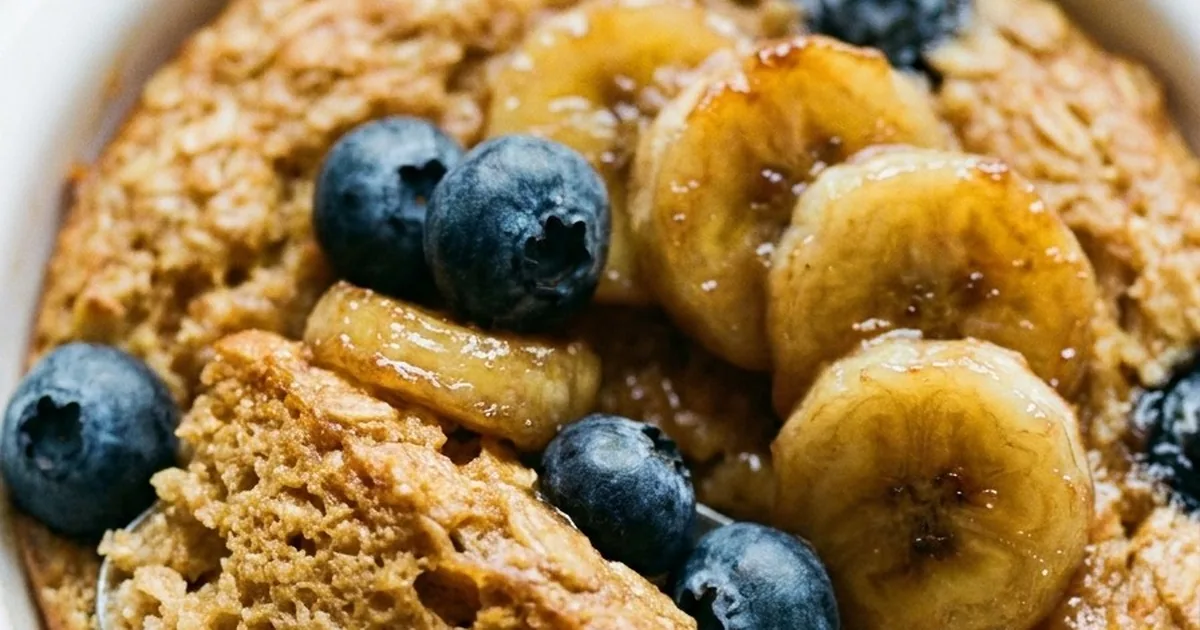
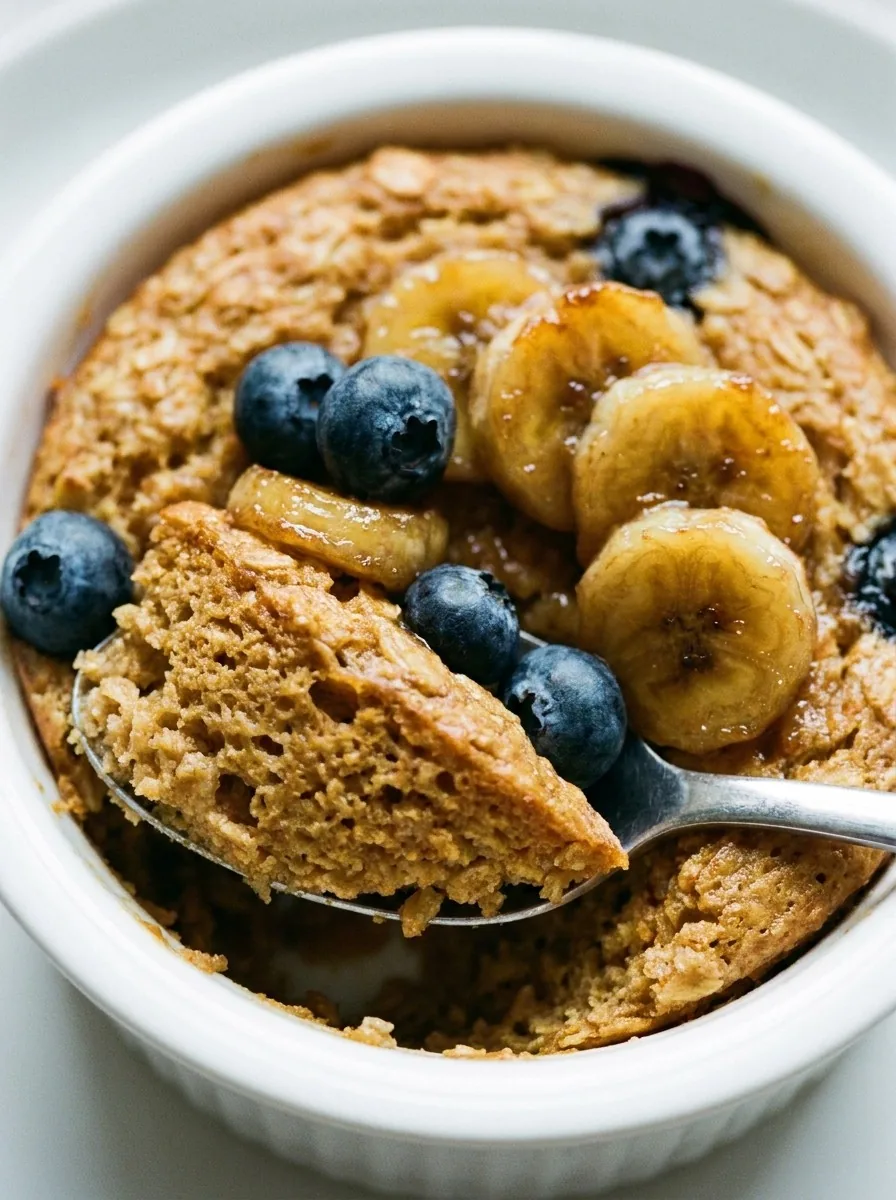
Baked oats blended with very ripe banana, egg and milk, poured into two ramekins with blueberries on top and baked for 25 minutes until set.
Baked oats sit somewhere between a bowl of porridge and a small breakfast cake, and the difference comes down to one step: the oats go into a blender before they go into the oven. Ground to a coarse flour they behave like cake flour, so the mixture rises, sets and slices instead of staying loose and spoonable. A very ripe banana does most of the sweetening, an egg holds the structure together, and a tablespoon of maple syrup rounds off the edges. Blueberries scattered on top sink part of the way in and burst as they bake. Twenty-five minutes in the oven, two ramekins, and breakfast is ready for two people with no pan to scrub.
| Prep Time | 10 | Cook Time | 25 |
| Servings | 2 | Calories | 540 kcal |
Ingredients
- 120 g (1 1/3 cups) rolled oats
- 2 very ripe bananas, about 240 g (8 1/2 oz) peeled
- 2 large eggs
- 180 ml (3/4 cup) milk, dairy or oat
- 1 tablespoon (20 g) maple syrup
- 1 1/2 teaspoons baking powder
- 1 teaspoon vanilla extract
- 1/2 teaspoon ground cinnamon
- 1/4 teaspoon fine salt
- 100 g (3/4 cup) blueberries, fresh or frozen
- 1 teaspoon butter or oil, for the ramekins
- 1 tablespoon flaked almonds, optional
Everything here is a cupboard or fruit-bowl item, and the only one worth planning ahead for is the banana. Two very ripe bananas carry most of the sweetness in this recipe, which is why a single tablespoon of maple syrup is enough. If your bananas are still firm and yellow, the result will taste flat and you will be tempted to pour in more syrup to compensate.
Rolled oats are the right choice over steel-cut or instant. Steel-cut oats are too hard to grind evenly in a domestic blender, and instant oats are already too fine, which gives a pasty crumb. Any milk works, including oat or almond; the recipe is forgiving about that and not about the banana.
Essential Kitchen Tools
| Blender or food processor | Grinding the oats, then mixing the batter |
| Two 250 ml ramekins | Individual portions that bake evenly |
| Kitchen scales | Oats and banana by weight, not by eye |
| Skewer or cocktail stick | Checking the centre at 25 minutes |
| Baking tray | Carrying both ramekins in and out safely |
A stick blender in a tall jug does the job if you have no blender, though the oats need a little longer to break down. Oversized mugs or a small gratin dish stand in for ramekins, with the baking time adjusted to the depth.
Why This Recipe Works
The whole character of this dish is decided in the blender. A rolled oat is a flattened, steamed grain with its structure intact, and in the oven it stays intact: you get soft individual oats held together by liquid, which is baked porridge. Ground to a coarse flour, those same oats release their starch, absorb the milk and egg evenly and form a continuous batter. Add baking powder and that batter can hold air, rise and set. The ingredients have not changed; only the particle size has, and that is the difference between a pudding and a cake.
The banana is doing three jobs at once. It sweetens, so the recipe needs barely any added sugar. It adds moisture and pectin, which keeps the crumb soft rather than dry, a real risk with a flour as thirsty as ground oats. And its sugars caramelise at the edges during baking, giving the browned, slightly sticky rim that makes a baked oat feel like a dessert. Underripe bananas cannot do any of this, because the starch has not yet converted to sugar.
The egg is the structure. Oats have no gluten, so nothing else in the bowl can trap and hold the rise. Egg protein sets at around 70 °C and locks the air bubbles in place at the moment the baking powder has finished working, which is why the top domes and stays domed instead of collapsing as it cools.
Blueberries sit on top rather than being stirred through on purpose. Folded in, they would release their juice into the batter and leave it streaky and damp. On the surface they burst upward, which keeps the crumb clean and gives you a layer of hot fruit against a plain base.
Pro Tips for Better Results
Blend the oats alone first. Adding the wet ingredients at the same time means the oats never grind properly, because the blades spin liquid instead of cutting grain. Twenty seconds dry, then everything else.
Stop blending at smooth. A long blend heats the mixture and activates the baking powder in the jug, so some of the rise is spent before baking. Thirty to forty-five seconds is enough.
Let the batter rest for 5 minutes. Ground oats keep absorbing liquid after mixing. Skipping the rest gives a looser bake that can taste wet in the centre.
Fill the ramekins three-quarters full. The mixture rises by roughly a third. Any fuller and it runs over the side and burns onto the tray.
Weigh the bananas. Bananas vary from 90 g to 150 g peeled. Two large ones can be 300 g, which makes the batter too wet to set properly in 25 minutes.
Judge by the press, not the colour. Banana browns quickly, so the top can look done before the centre is. Press the middle with a fingertip: it should spring back rather than dent.
Do not open the oven before 20 minutes. The rise comes from baking powder alone and a sudden drop in temperature will sink it.
Nutrition Facts (per serving)
| Calories | Protein | Carbs | Fat | Fiber |
|---|---|---|---|---|
| 540 kcal | 17g | 88g | 13g | 10g |
Figures are for one of two ramekins, made with semi-skimmed milk and without the almonds or any topping. Using oat milk and leaving out the maple syrup brings it to around 480 kcal. Most of the fibre comes from the oats and the banana skin-free flesh, and a serving covers a good part of a day’s intake on its own.