Creamy Orange Gelatin Squares You Can Eat With Your Hands
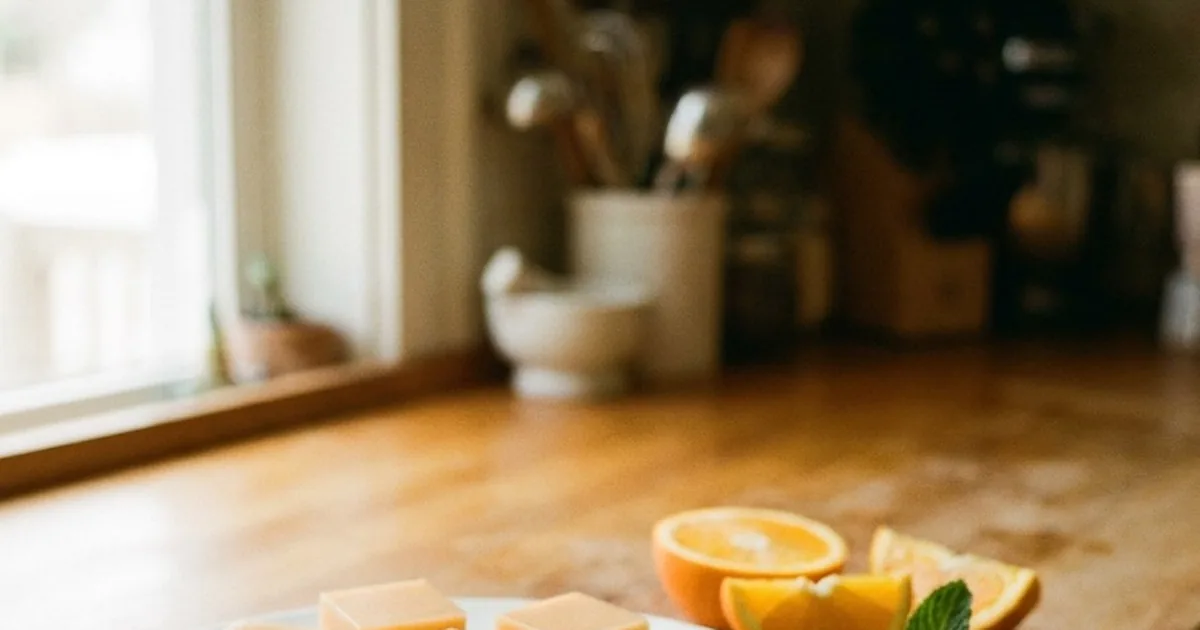
Soft, creamy orange gelatin squares made with real juice and yogurt. Easy to cut, easy to carry, and they hold their shape for days in the fridge.
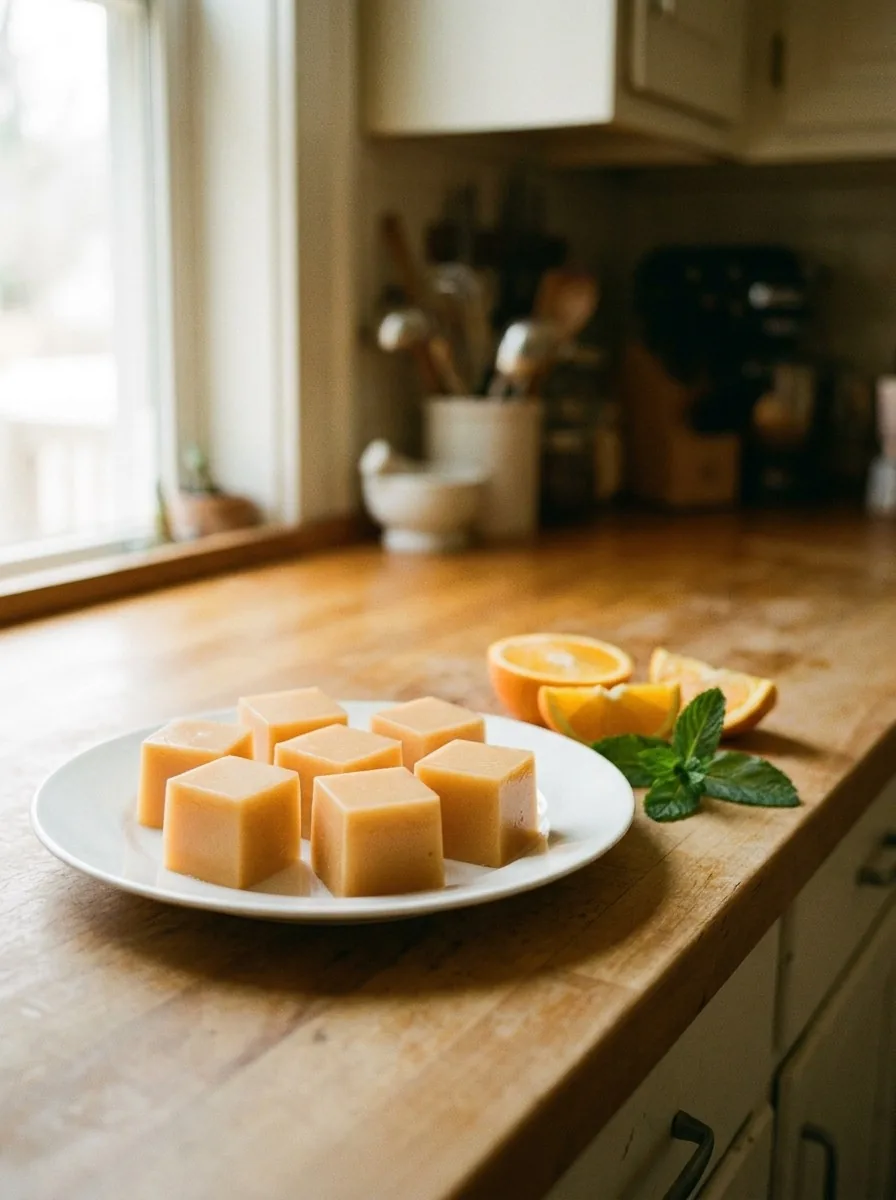
These orange squares sit somewhere between a jelly and a cheesecake: firm enough to pick up with your fingers, soft enough to melt on the tongue. They are made with real orange juice, plain yogurt and unflavored gelatin, and they cost almost nothing to put together. Cut them into neat cubes and they disappear from the plate faster than any dessert I serve.
| Prep Time | 20 | Cook Time | 5 |
| Servings | 16 squares | Calories | — |
Why These Squares Are Worth Making
A plain fruit jelly is refreshing but thin. Add yogurt and the whole thing changes: the colour softens to pale apricot, the texture turns silky, and the tartness of the orange is rounded off by the dairy. It eats like a very light cheesecake without any baking, any cream cheese or any crust.
The practical side matters too. Because the slab is cut into squares, there is no unmoulding, no individual glasses to wash, and nothing to serve with a spoon. You can put the squares on a plate for guests, pack them in a lunchbox, or carry them to a picnic in a sealed container. They keep their edges for three days.
It is also one of those recipes where the quality of the result depends almost entirely on the juice. Freshly squeezed oranges give a dessert that genuinely tastes of fruit; cheap concentrate gives you something that tastes vaguely of sweets. Squeeze the oranges if you can.
Ingredients
- 500 ml (2 cups) fresh orange juice, strained, from about 6 oranges
- 120 ml (1/2 cup) cold water
- 5 teaspoons (about 15 g) unflavored powdered gelatin
- 250 g (1 cup) plain whole-milk yogurt, at room temperature
- 70 g (1/3 cup) granulated sugar, or to taste
- 1 tablespoon finely grated orange zest
- 1 teaspoon vanilla extract
- 1 pinch of fine salt
Five teaspoons of gelatin may look like a lot compared with a classic jelly, and it is. A dessert you can pick up has to be firmer than one eaten with a spoon, and yogurt softens the set, so the extra gelatin compensates for both. If you would rather eat these from a dish with a spoon, drop to three and a half teaspoons.
Whole-milk yogurt is the right choice here. Low-fat versions contain more water and give a slightly rubbery square, and Greek yogurt, being thicker, needs 50 ml of extra juice to stay pourable. Avoid flavoured yogurt entirely, as the added sugar throws the balance off.
Equipment You Will Need
- A 20 x 20 cm square dish, metal or glass
- Baking paper to line it
- A small saucepan
- A small bowl for blooming the gelatin
- A large mixing bowl and a whisk
- A fine grater for the zest
- A thin, sharp knife for cutting
A loaf tin also works if that is what you have; you will simply get thicker, shorter bars instead of squares.
How to Make Them, Step by Step
- Line a 20 x 20 cm (8 x 8 inch) dish with baking paper, letting it hang over two sides so you can lift the slab out later. A metal or glass dish both work.
- Pour the cold water into a small bowl, sprinkle the gelatin evenly over the surface and leave it for 10 minutes without stirring. It will swell into a firm, spongy block.
- Put half the orange juice in a saucepan with the sugar, the zest and the pinch of salt. Warm it over medium-low heat, stirring, only until the sugar disappears and steam starts to rise. Do not let it boil.
- Take the pan off the heat, add the bloomed gelatin and stir slowly for a minute until the liquid is completely clear with no visible grains.
- Stir in the remaining cold orange juice and the vanilla. The mixture should now be lukewarm, not hot. This matters for the next step.
- Whisk the yogurt in a large bowl until smooth, then pour the orange mixture into it in a thin stream while whisking continuously. Adding cold yogurt to hot liquid all at once is what makes the mixture split, so go slowly.
- Pour everything into the lined dish. If any foam has formed on top, drag a spoon across the surface to lift it off, or lay a sheet of kitchen paper flat on the surface for one second and peel it away.
- Chill uncovered for at least 5 hours, or overnight, until the slab is firm all the way through and barely wobbles when you shake the dish.
- Lift the slab out using the paper, set it on a board and cut it into 16 squares with a thin knife wiped clean between cuts. Serve cold.