Watermelon Lime Jello Cups
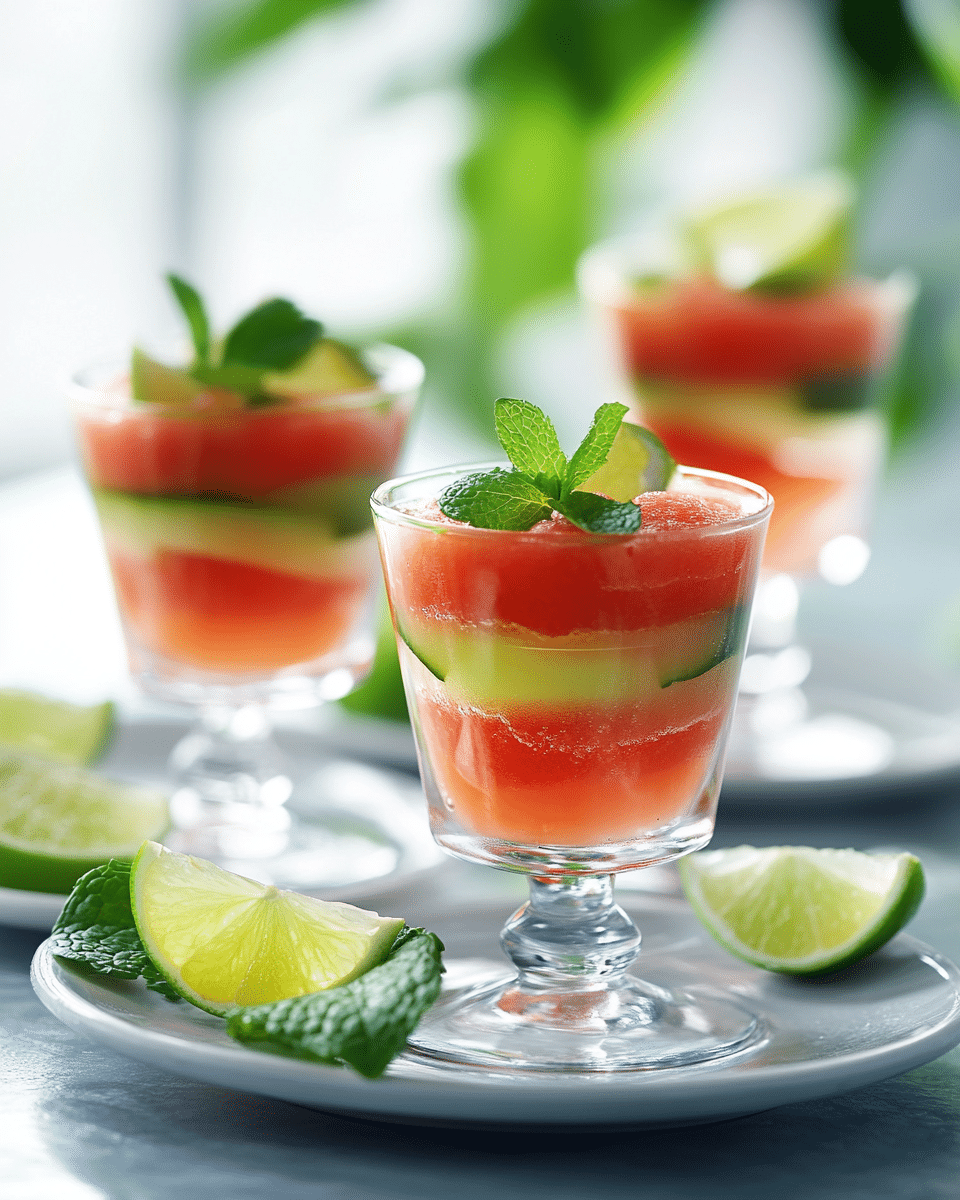
Cool down with these refreshing watermelon lime jello cups! Easy 3-ingredient recipe. Learn about calories, macros, and healthy swaps. Guilt-free dessert!
Craving something sweet but trying to avoid the sugar crash? These Watermelon Lime Jello Cups are your answer! It’s easy to fall into the trap of restrictive dieting, but let’s be real, sometimes you just want a treat. This recipe offers a lighter take on a classic dessert, focusing on natural flavors and minimizing added sugars. The truth is, no single recipe will magically make you lose weight. But smart, balanced choices, like these refreshing Watermelon Lime Jello Cups, can definitely help you stay on track!
| Prep Time | 10 | Cook Time | 4 |
| Servings | 6 | Calories | 35 kcal |
Ingredients
- 4 cups cubed watermelon
- 1/4 cup lime juice, freshly squeezed
- 2 envelopes (1/4 ounce each) unflavored gelatin
Recommended Tools You’ll Need
| Tool | Why You Need It |
|---|---|
| Blender | For pureeing the watermelon into juice. |
| Fine-Mesh Sieve | To remove pulp and seeds from the watermelon juice. |
| Saucepan | To gently heat the watermelon juice. |
| Serving Cups | To portion and set the jello. |
Calorie Reality
At only 35 calories per serving, these Watermelon Lime Jello Cups are a light and refreshing way to satisfy your sweet tooth. They fit easily into most daily calorie budgets, leaving plenty of room for nutritious meals.
About Your Daily Budget: Your TDEE (Total Daily Energy Expenditure) determines how many calories you burn daily. These jello cups are low in calories, fitting into almost any TDEE range without causing significant weight gain as long as you eat mindfully.
Diet Compatibility
Compatible with: Vegetarian, Vegan, Gluten-Free, Dairy-Free
Not compatible with: Keto, Low-Carb
Warning: Mixing Diets: While these jello cups are low in fat, combining them with a high-fat meal could contribute to a process called lipogenesis, where excess carbohydrates are converted to fat. Enjoy them in moderation as part of a balanced eating plan to avoid unwanted fat storage.
Expert Tips
For the best flavor, use the ripest watermelon you can find. A slightly overripe watermelon will be sweeter and more flavorful. To manage weight effectively, focus on whole, unprocessed foods for the majority of your meals and use treats like these jello cups sparingly.
Macros Breakdown
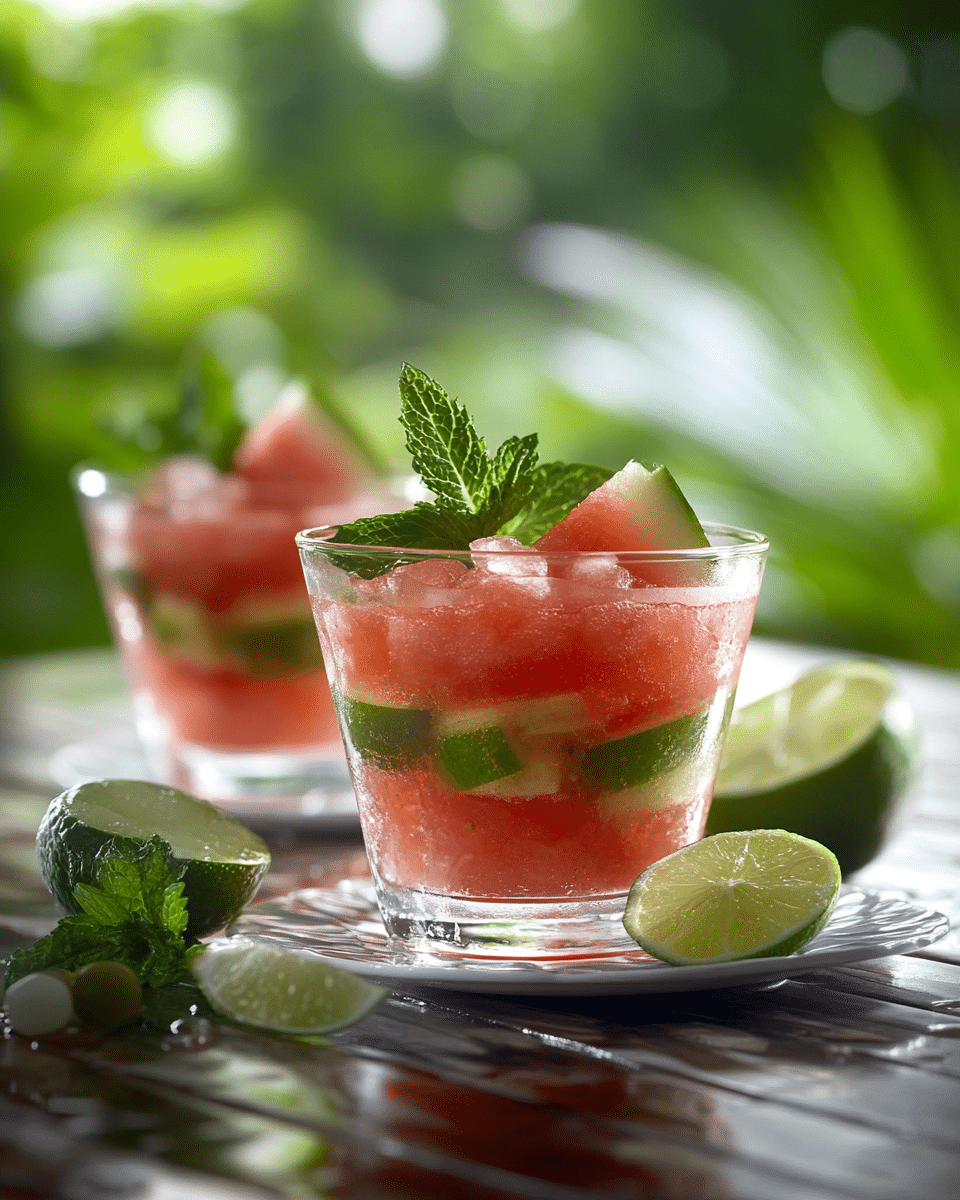
With nearly all calories coming from carbohydrates and a small amount of protein, these jello cups provide quick energy. They’re essentially sugar water, so don’t expect sustained fullness. They’re best as a small treat, not a meal replacement.
Nutrition Information (per serving)
| Calories | Protein | Carbs | Fat | Fiber |
|---|---|---|---|---|
| 35 kcal | 2g | 7g | -g | -g |
Instructions
- Place the cubed watermelon into a blender and blend until smooth. Strain the watermelon juice through a fine-mesh sieve to remove any pulp.
- In a small bowl, sprinkle the gelatin over 1/2 cup of the watermelon juice. Let it sit for 5 minutes to soften (bloom).
- In a saucepan, heat the remaining watermelon juice over medium heat until it’s warm, but not boiling. Remove from heat.
- Add the softened gelatin mixture to the warm watermelon juice and stir until the gelatin is completely dissolved.
- Stir in the lime juice.
- Pour the mixture into individual serving cups or a larger bowl.
- Refrigerate for at least 4 hours, or until firm.
- Enjoy your Watermelon Lime Jello Cups!
Key Terms Explained
| Term | Explanation | Why it matters here |
|---|---|---|
| Gelatin | Gelatin is a protein derived from collagen. When mixed with water and cooled, it forms a solid, jelly-like substance. | Gelatin is what gives these cups their signature jello texture; without it, it would just be flavored juice. |
| TDEE | TDEE stands for Total Daily Energy Expenditure. It’s the number of calories your body burns in a day based on your activity level. | Knowing your TDEE helps you understand how these jello cups fit into your overall calorie needs for weight management. |
| Lipogenesis | Lipogenesis is the metabolic process where your body converts excess carbohydrates into fat for storage. | Consuming large amounts of simple carbs like those in this dessert, *especially* with high fat foods, can contribute to fat storage via lipogenesis. |