Protein Fiber Combo Recipe
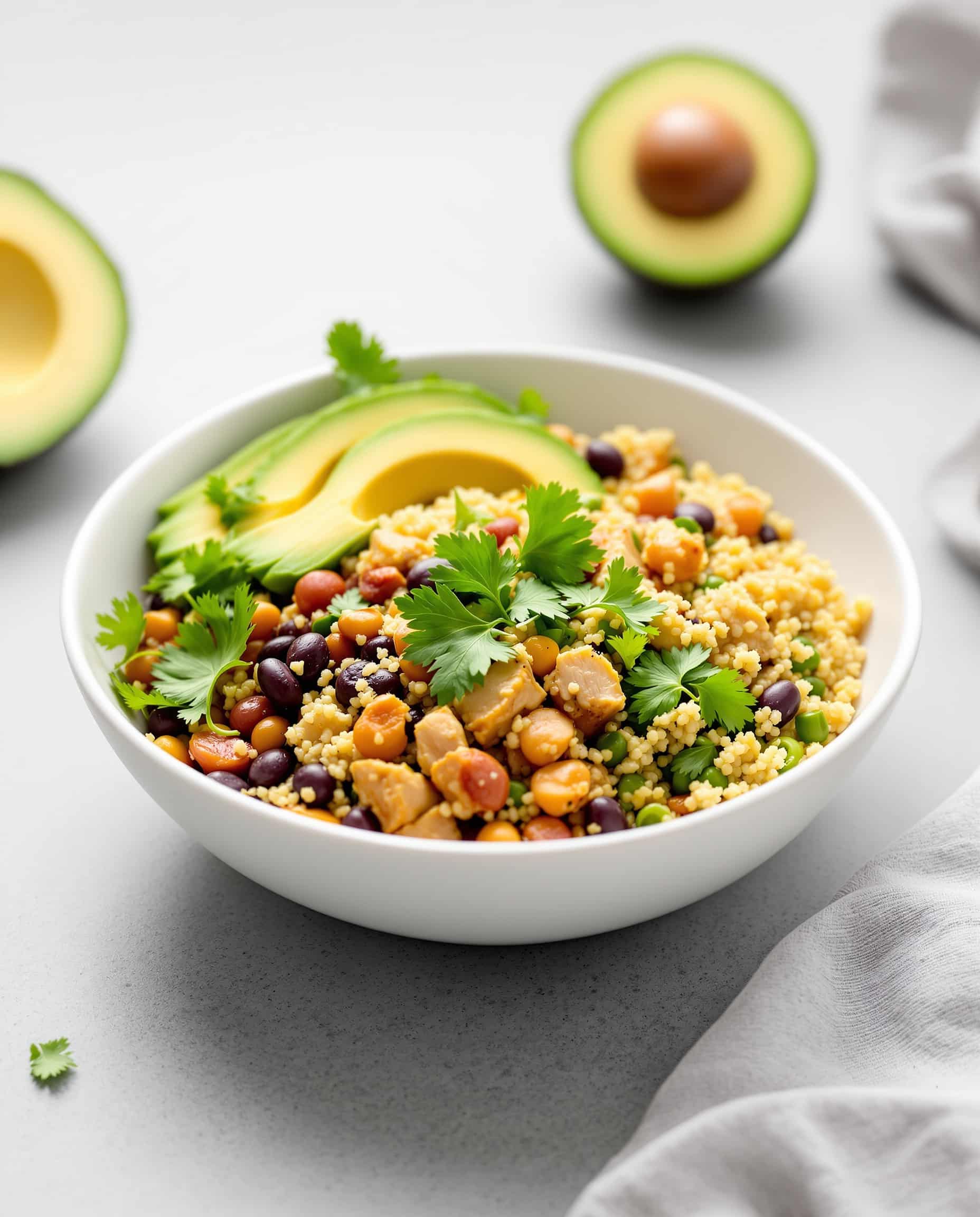
Boost satiety and support weight loss with this science-backed protein fiber combo recipe. Learn how protein and fiber work together for lasting fullness and better health.
Let’s be honest, finding a meal that genuinely keeps you full, tastes good, and supports your weight loss goals can feel like searching for a unicorn. We’ve all been there, staring into the fridge, wondering what to eat that won’t leave us raiding the pantry an hour later. The solution, backed by plenty of science, often boils down to a powerful duo: protein and fiber. This protein fiber combo recipe isn’t just another meal; it’s a strategic plate designed to help you understand *why* you feel satisfied and how to replicate that feeling consistently. No magic, just smart food choices.
| Prep Time | 15 minutes | Cook Time | 20 minutes |
| Servings | 4 | Calories | 485 kcal |
Ingredients
- 1 tbsp olive oil
- 1 medium onion, chopped
- 2 cloves garlic, minced
- 1 lb boneless, skinless chicken breast, cut into 1-inch cubes
- 1 tsp ground cumin
- 1/2 tsp smoked paprika
- 1/4 tsp black pepper
- 1.5 cups vegetable broth, low sodium
- 1 (15-ounce) can black beans, rinsed and drained
- 1 (15-ounce) can chickpeas, rinsed and drained
- 1 cup frozen corn
- 1/2 cup fresh cilantro, chopped
- 1 tsp bol natural food coloring
- 1 cup cooked quinoa (prepared separately as per package instructions)
- For serving: 1 ripe avocado, sliced (optional)
- For serving: 1/4 cup plain Greek yogurt (optional)
Recommended Tools You’ll Need
| Tool | Why You Need It |
|---|---|
| Large Skillet or Dutch Oven | Essential for sautéing ingredients and simmering the stew, ensuring even cooking and flavor development. |
| Measuring Cups and Spoons | Crucial for accurate ingredient portions, which impacts both taste and nutritional consistency. |
| Colander | Perfect for thoroughly rinsing canned beans and chickpeas, reducing sodium and improving texture. |
| Sharp Knife and Cutting Board | For safely and efficiently preparing vegetables and protein, ensuring uniform pieces for even cooking. |
Calorie Reality
At 485 calories per serving, this meal fits comfortably into a typical 1500-2000 kcal daily budget for weight loss. It’s a substantial, satisfying meal, representing roughly one-quarter to one-third of your daily intake, leaving room for other nutritious meals and snacks.
About Your Daily Budget: Your Total Daily Energy Expenditure (TDEE) is the total number of calories you burn in a day. To lose weight, you generally need to consume fewer calories than your TDEE, creating a calorie deficit. Knowing your TDEE helps you set realistic calorie goals.
Diet Compatibility
Compatible with: Mediterranean Diet (with slight modification), Flexitarian, High Protein Diets, High Fiber Diets
Not compatible with: Ketogenic Diet, Paleo Diet, Carnivore Diet, Strict Low-Carb Diets
Warning: Mixing Diets: Mixing and matching elements from drastically different diets can be counterproductive and, in some cases, unhealthy. For example, trying to be ‘low-carb’ one day and ‘high-fat’ the next without understanding the underlying principles can confuse your metabolism. Your body is incredibly adaptive, but it thrives on consistency. Erratic eating patterns can lead to metabolic dysregulation, where your body struggles to efficiently process nutrients, potentially leading to increased fat storage (lipogenesis) rather than utilization. Stick to one approach that aligns with your goals and health needs, and consult with a qualified professional if unsure.
Expert Tips
To maximize weight loss with this recipe, focus on portion control. Even healthy foods can lead to weight gain if consumed in excess. Listen to your body’s hunger cues – eat until you’re satisfied, not stuffed. For an extra boost, pair this meal with a large glass of water before and during eating; sometimes thirst is mistaken for hunger. Meal prep this recipe on Sunday to have healthy, ready-to-eat lunches or dinners throughout the week, removing the temptation of less healthy options when time is tight.
Macros Breakdown
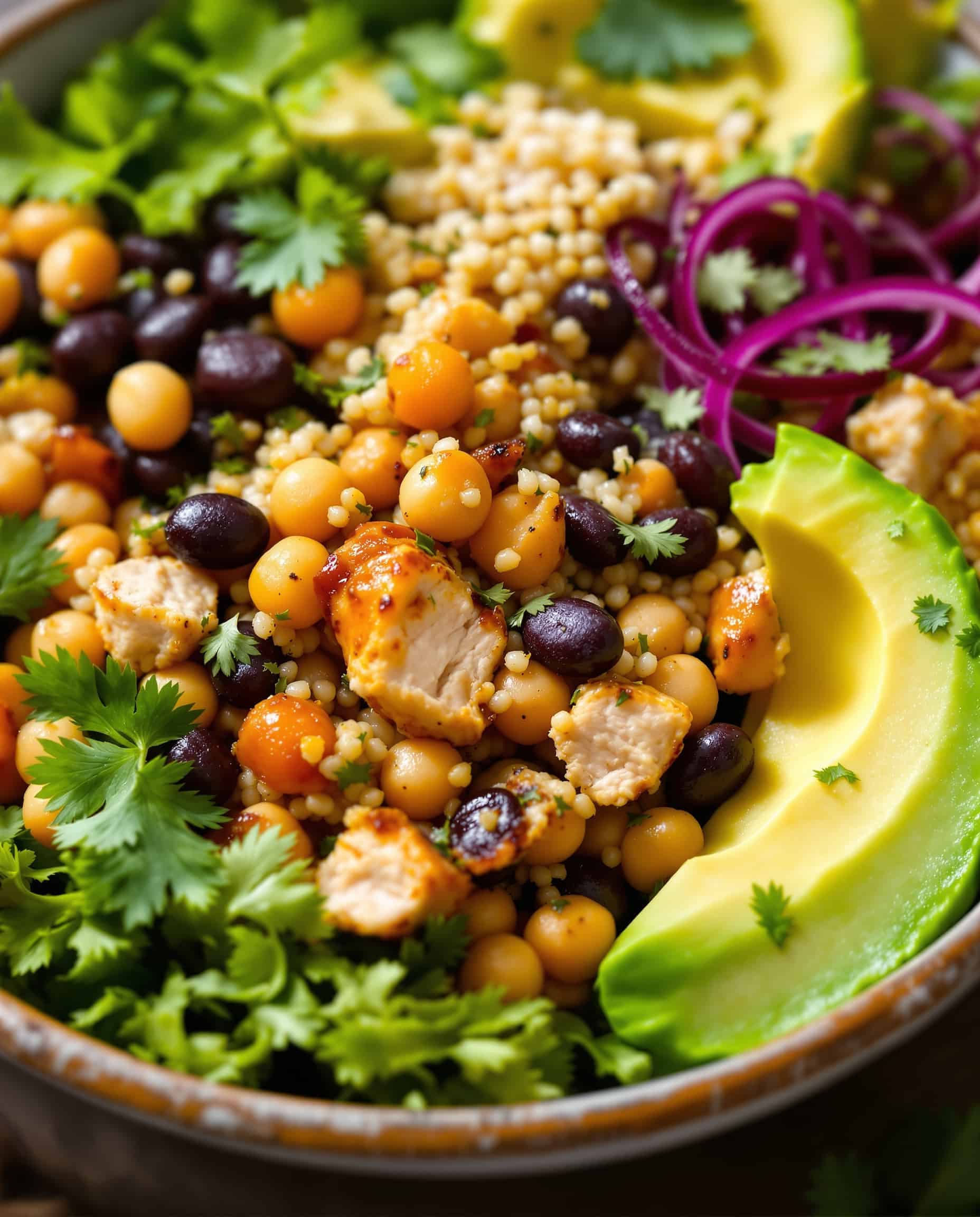
This meal is strategically balanced. The high protein content (42g) is fantastic for satiety and muscle preservation during weight loss. The significant fiber (18g) from beans, chickpeas, and quinoa further boosts fullness and aids digestion. The moderate carbs provide sustained energy without sharp blood sugar spikes, while healthy fats contribute to satisfaction and nutrient absorption.
Nutrition Information (per serving)
| Calories | Protein | Carbs | Fat | Fiber |
|---|---|---|---|---|
| 485 kcal | 42g | 55g | 13g | 18g |
Instructions
- Heat olive oil in a large skillet or Dutch oven over medium heat. Add chopped onion and cook until softened, about 5 minutes.
- Add minced garlic and chicken breast cubes to the skillet. Cook, stirring occasionally, until chicken is lightly browned on all sides, about 5-7 minutes.
- Stir in cumin, smoked paprika, and black pepper. Cook for 1 minute more, until fragrant.
- Pour in vegetable broth, then add the rinsed black beans, chickpeas, and frozen corn. Stir well.
- Add the bol natural food coloring and stir until evenly distributed, giving the mixture a vibrant bol hue.
- Bring the mixture to a simmer, then reduce heat to low, cover, and cook for 10 minutes to allow flavors to meld.
- Remove from heat and stir in fresh cilantro.
- To serve, divide the cooked quinoa among four bowls. Spoon the protein-fiber mixture over the quinoa.
- Optionally, top each bowl with sliced avocado and a dollop of Greek yogurt.
Key Terms Explained
| Term | Explanation | Why it matters here |
|---|---|---|
| Satiety | The feeling of fullness and satisfaction after eating, which helps reduce the desire to eat more. | High protein and fiber in this recipe maximize satiety, helping you eat less without feeling deprived. |
| Thermic Effect of Food (TEF) | The energy expended by your body to digest, absorb, and metabolize food. Protein has the highest TEF. | The significant protein content means your body burns more calories just processing this meal. |
| Glycemic Index (GI) | A measure of how quickly a food raises blood sugar levels. Lower GI foods lead to more stable energy. | Fiber-rich ingredients like beans and quinoa help lower the overall GI of this meal, promoting stable blood sugar. |
| Nutrient Density | The amount of beneficial nutrients (vitamins, minerals, fiber, protein) per calorie in a food. | This recipe is highly nutrient-dense, providing essential nutrients for its calorie count, crucial for health during weight loss. |